Rip Eye
Using Artificial Intelligence to Improve Rip Current Safety
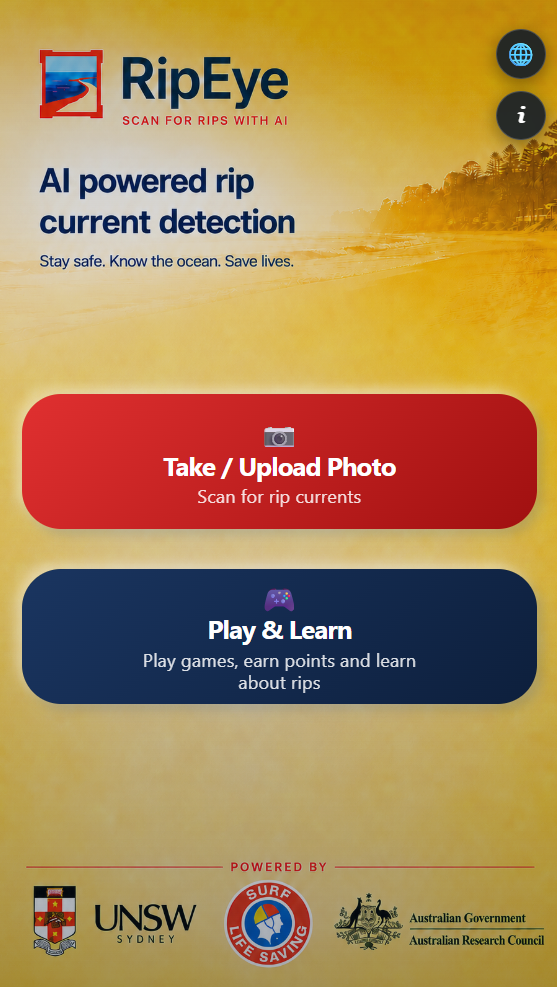
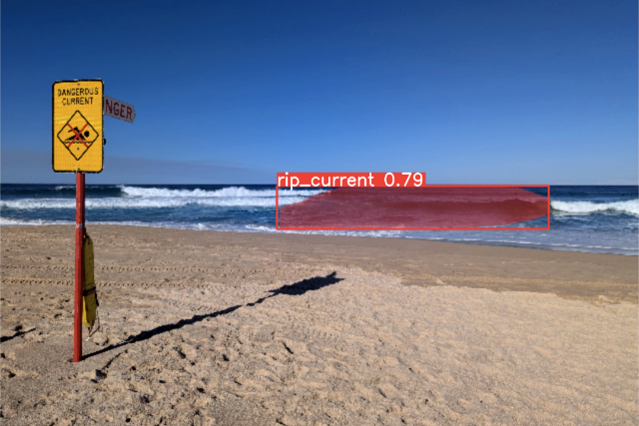
Rip currents are one of Australia's most dangerous coastal hazards, contributing to more drowning deaths each year than many other natural hazards combined. Despite extensive beach safety education campaigns, many beachgoers still struggle to identify rip currents, particularly at unpatrolled beaches where most coastal drownings occur. The RipEye project is developing a new approach to rip current safety by combining artificial intelligence, smartphone technology, and interactive learning tools to help people better recognise and avoid rip currents.
Funded through an Australian Research Council Linkage Project in partnership with Surf Life Saving Australia, RipEye uses smartphones, advanced computer vision, and deep learning algorithms to automatically detect rip currents across a wide range of Australian beach conditions. Over 10,000 images containing approximately 25,000 rip currents were annotated.
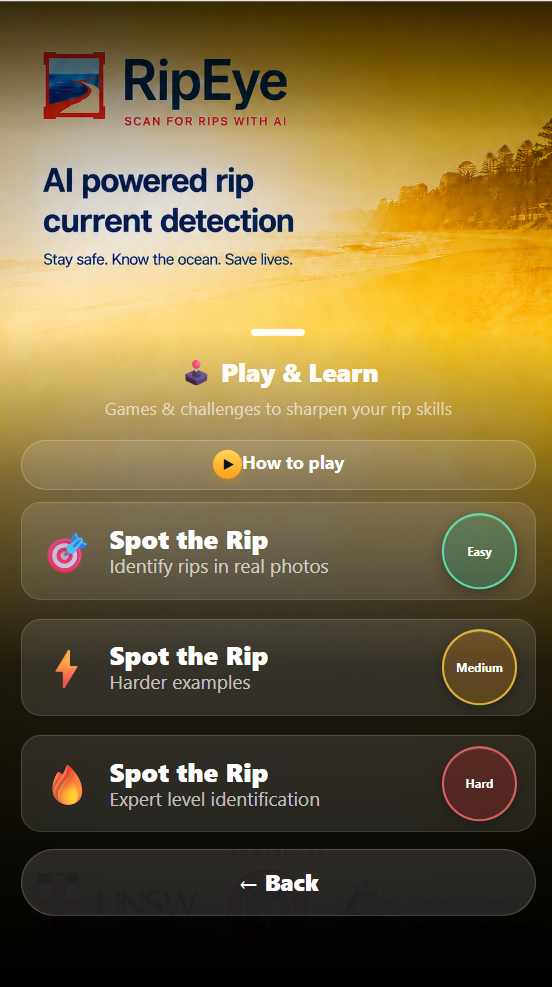
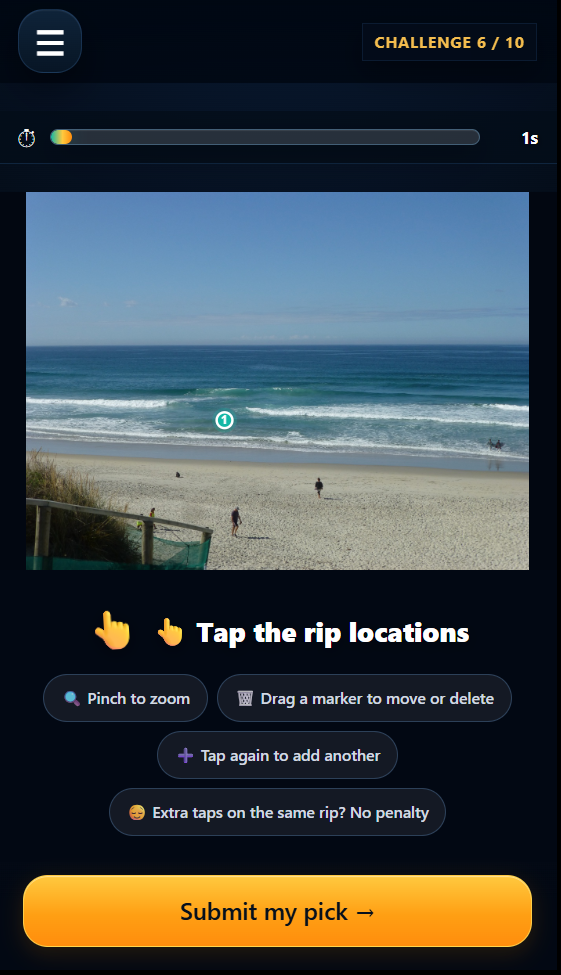
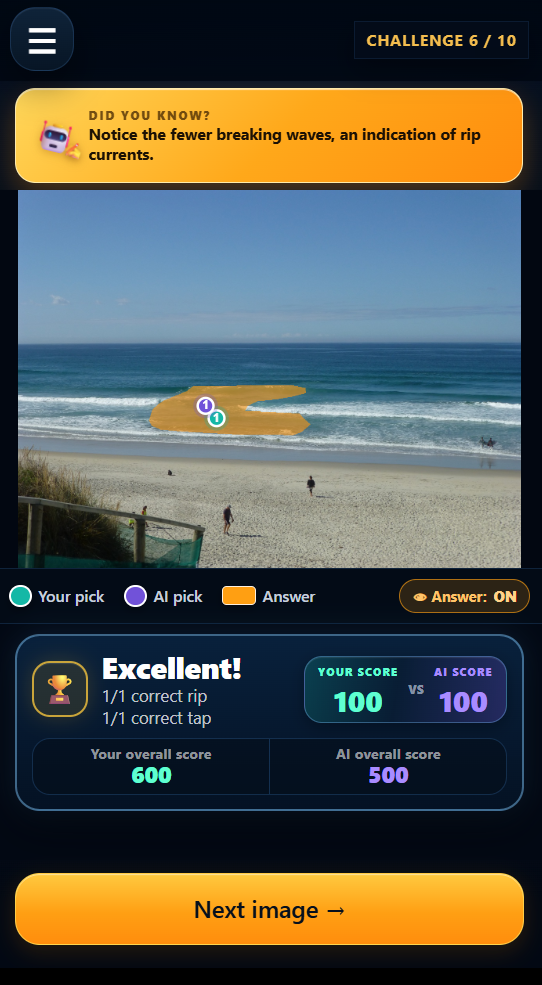
Utilising the deep learning rip current detection, the project also incorporates a gamified online learning platform Challenge the RipEye, allowing users to test and improve their rip identification skills while competing against the AI system. It also provides multilingual support across 11 languages. The RipEye learning platform will also be evaluated through a number of in-person surveys conducted at beaches of beachgoers and surf lifesavers. Through collaboration with surf lifesavers, young adults, culturally and linguistically diverse communities, and regional Australians, RipEye is creating engaging, evidence-based educational tools that will support beach safety training and enhance community awareness of rip current hazards.
Key Outcomes
Development of a smartphone-based rip current detection tool capable of identifying rip currents in real-world settings.
Creation of a large, open-access rip current annotation dataset to support future research in coastal imaging, artificial intelligence, and beach safety.
Implementation of the Challenge the RipEye educational game, enabling users to learn and test rip current identification skills through interactive gameplay.
Implementation of multilingual support across 11 languages to improve accessibility and engagement for culturally and linguistically diverse beachgoers.
Co-designed beach safety resources developed in partnership with surf lifesavers and priority user groups, including young adults, culturally diverse communities, and regional Australians.
Evaluation of how AI-driven rip current detection can improve beachgoer decision-making, rip current awareness, and public safety outcomes.
This short video demonstrates how the RipEye AI scan tool works.
Project Team (UNSW Sydney)
Dr Mandana Ghanavati (Lead Data Scientist, School of Civil and Environmental Engineering)
Shenyang Qian (PhD Student, Computer Vision Research, School of Computer Science and Engineering)
Rachel Irvine (PhD Student, School of Biological, Earth and Environmental Sciences)
Dr Mitchell Harley (Project Lead CI, School of Civil and Environmental Engineering)
Professor Rob Brander (Project CI, School of Biological, Earth and Environmental Sciences)
Associate Professor Yang Song (Project CI, School of Computer Science and Engineering)
Associate Professor Amy Peden (Project CI, School of Population Health)
Professor Toby Walsh (Project CI, School of Computer Science and Engineering)
Dr Imran Razzak (Project CI, School of Computer Science and Engineering)
Dr Jasmin Lawes (Project PI, Surf Life Saving Australia; School of Biological, Earth and Environmental Sciences)